Why Your "Pipes" Are More Than Just Commodities
In the world of industrial ventilation, ducting is often treated as a commodity, basically "industrial plumbing." In reality, the ductwork is a critical performance component. It is the engine that maintains the velocity required to keep your plant safe and your air clean.
Most designers choose between clamp-together ducting and spiral ductwork. While both move air, the long-term operational consequences of that choice are vast.
Clamp-Together Ducting: High Agility, High Integrity
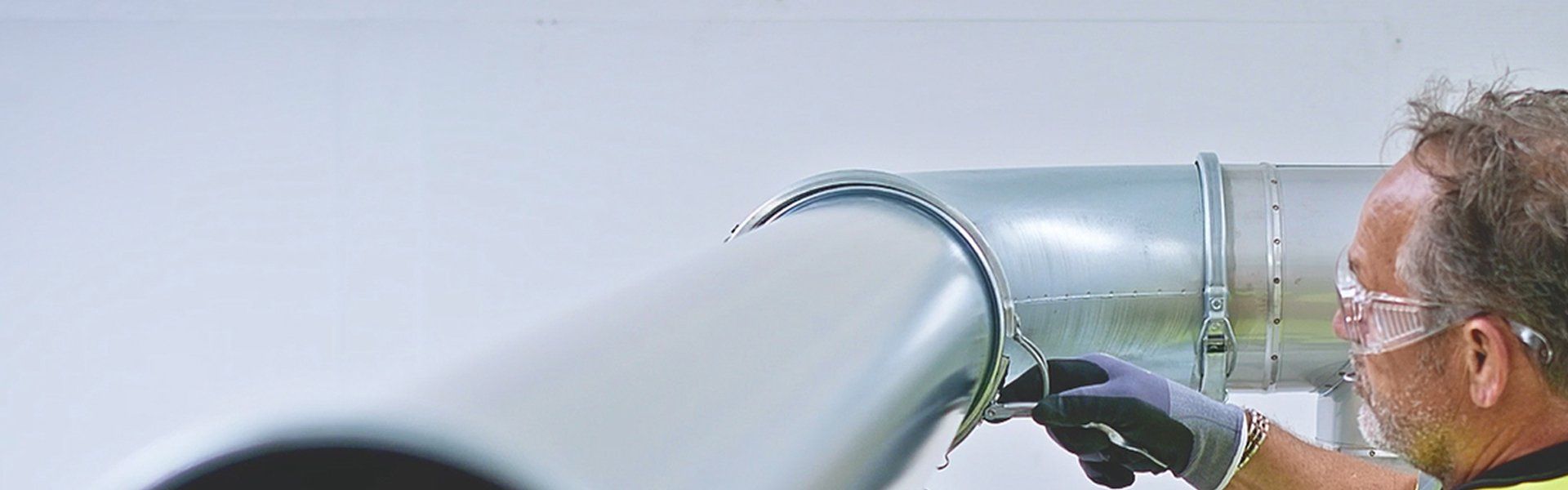
Clamp-together systems (like Nordfab’s Quick-Fit®) are designed for environments that value uptime and adaptability.
- The Strengths: Superior sealing integrity, rapid installation, and tool-free access for inspection.
- The "Secret" Advantage: It is inherently modular. If you move a machine or add a new pickup point, you don't scrap your investment, you simply reconfigure it.
- The Tradeoff: The initial material cost is often higher than raw spiral pipe, though this is usually offset by significantly lower labor costs (Quick-Fit offers 45-50% reduction in installation time and 30-50% lower total installed cost).
Spiral Ducting: Low Entry Cost, High Maintenance
Spiral duct is a staple in the HVAC world, but industrial dust collection is a different animal.
- The Strengths: Lower initial material cost and a familiar installation method for most general contractors.
- The Tradeoff: Joint leakage. Over time, the screws and tape/sealant used in spiral joints can fail under the vibration and pressure of a dust collection system.
- The "Hidden" Cost: Reconfiguration is a nightmare. Modifying a spiral system usually involves "cutting and gutting," leading to significant downtime and wasted material.
Three Ways Your Choice Impacts Performance
- Airflow Balance: Every leak in a joint is "stolen" air. In a spiral system with hundreds of joints, those micro-leaks add up, dropping your transport velocity and leading to dust settled in the pipes—a major fire and explosion risk. (Read: The Science of Duct Leakage)
- The "Inspection Gap": It’s a simple rule of human nature: Systems that are difficult to inspect go uninspected. If a technician has to spend an hour undoing sealant and screws to check a clog, they’ll put it off. If they can pop a clamp, inspect, and re-affix the clamp in minutes, the maintenance actually gets done.
- Future-Proofing: Processes change. Machines move. Clamp-together ducting evolves with your floor plan. Spiral ducting is a permanent monument to your current layout.
Final Thought
Ducting isn't just a connection, it’s the backbone of your system. Choosing the right "bones" today prevents a skeletal performance tomorrow.