In modern manufacturing, the Programmable Logic Controller (PLC) is the brain of the operation. While facility managers diligently track ambient temperature, they often overlook a more localized thermal threat: dust accumulation.
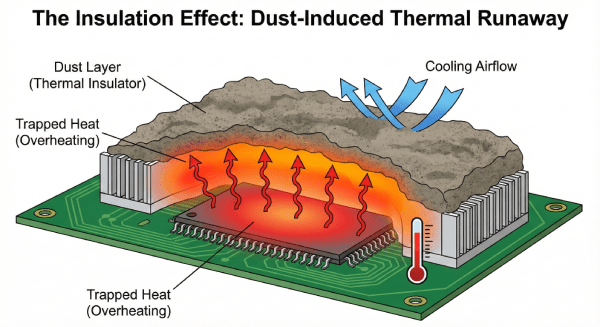
All power electronics — PLCs, Variable Frequency Drives (VFDs), and power supplies — generate heat. They rely on heat sinks and natural convection to dissipate this energy. When fugitive dust enters a control cabinet, it doesn't just sit there; it coats these components.
Most industrial dusts (wood, paper, lint, and many polymers) act as effective thermal insulators. When dust settles on a heat sink, it creates a "blanket" that traps waste heat.
The first sign of thermal distress isn't usually a total burnout—it is the intermittent fault. Overheated processors act unpredictably, causing logic errors, sensor dropouts, or random shutdowns that disappear when the machine is rebooted. These "ghosts" lead to hours of expensive troubleshooting downtime where technicians replace perfectly good sensors, unaware that the root cause is a dusty, overheating PLC.
Effective source capture doesn't just keep the floor clean; it protects the expensive infrastructure that keeps the line running.